Bedding · Materials & Care
Wool Comforters Explained: Breathability, Warmth, and Care
A comforter has a quiet job: hold warmth close without making the bed feel sealed off from the world. Wool is one material that can help strike that balance. Its fibers insulate while absorbing and releasing moisture, but performance depends on more than the word “wool” on a label. Fill, shell, construction, climate, and care all shape the experience.
Understanding those details can help you decide whether wool bedding belongs in your room—and what to look for if it does.
What makes wool different?
Wool fibers have a structure that gives them useful insulating properties. In a comforter, a layer of wool fill traps air, helping slow the movement of heat away from the body. The result is warmth without necessarily relying on a dense, heavy layer. That warmth is not a fixed promise: the amount and arrangement of fill, the fabric around it, and the temperature of the room all matter.
Wool is also hygroscopic, meaning its fibers can take up water vapor from the surrounding air. This is different from saying that a wool comforter will keep every sleeper dry or regulate temperature perfectly. It does mean that wool can interact with moisture in ways that may help a bed feel less clammy than a poorly ventilated layer. How noticeable that quality is varies from person to person and from one bedroom to another.
These features explain the appeal of wool bedding to people who want warmth with a more breathable feel. They do not make wool universally comfortable. Someone who sleeps hot, prefers a very light cover, or lives in a humid room may have different priorities from someone who gets cold at night or wants a substantial layer through winter.
Breathability is a system, not a single feature
It is tempting to treat breathability as a property printed on a product tag. In practice, it emerges from the whole sleep setup. The comforter’s shell, the density of its fill, the weave of its cover, the sheets beneath it, and the room’s airflow work together. A breathable fiber can still feel stuffy if it is packed into a dense construction and layered over bedding that retains heat.
Wool’s capacity to absorb water vapor is often part of the conversation about comfort. Moisture management is not the same as active cooling: a wool comforter does not lower room temperature, remove humidity from the bedroom, or guarantee a dry sensation. Rather, the fiber’s relationship with moisture may contribute to a less damp-feeling microclimate around the bed. The effect is shaped by ventilation and by the sleeper’s own heat and perspiration.
For a useful comparison, consider the complete bed instead of one material in isolation. A heavy duvet cover can change how a comforter feels. So can a waterproof mattress protector, flannel sheets, or a room with limited air circulation. If the bed feels too warm, adjusting a single layer or improving airflow may make a bigger difference than changing the comforter alone.
- Check the shell: Look for the stated fabric and weave. A shell’s feel and density affect how air moves through the finished comforter.
- Consider the surrounding layers: Sheets, protectors, blankets, and pajamas all contribute to warmth and moisture retention.
- Think about the room: Indoor humidity, ventilation, and seasonal temperature can change how the same comforter performs.
- Allow for personal differences: Comfort is individual, and shared beds may call for adjustable layers rather than a single all-purpose solution.
Warmth, weight, and the feel of a bed
Warmth is often the first question shoppers ask, but weight is a separate consideration. A comforter can feel substantial without being the warmest option, or feel relatively light while providing useful insulation. The type and quantity of wool fill, the way it is distributed, and the overall construction all influence both qualities.
Some people enjoy a cover that rests gently across the body; others prefer a lighter layer with little pressure. There is no objective “right” weight for a comforter. If you are sensitive to heavy bedding, try to find clear information about fill weight and the comforter’s total weight, where available. If a manufacturer provides only a seasonal warmth description, treat it as a starting point rather than a guarantee, since “warm” can mean different things across brands and climates.
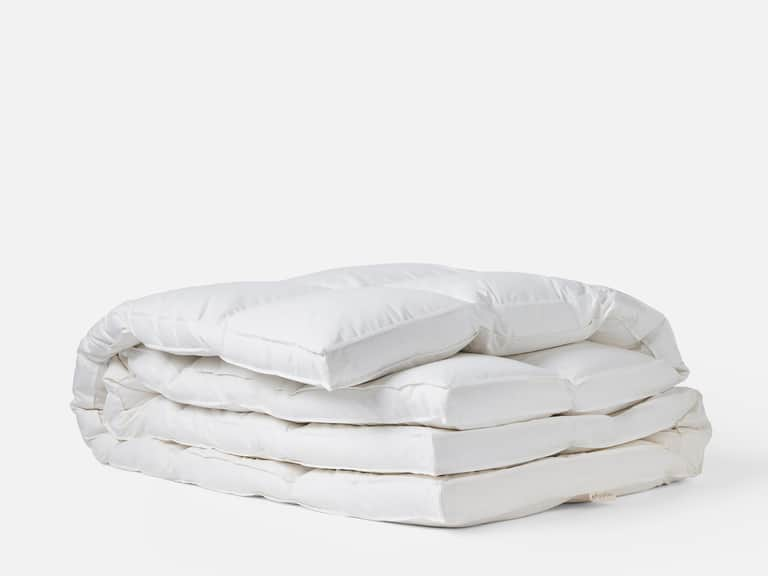
Construction matters because loose fill needs to stay evenly spread. Stitching or internal compartments can help limit movement, although the details differ among designs. Uneven distribution may leave some areas thinner and others crowded, changing warmth across the surface. Inspect the construction description and care guidance, and look for practical details about how the comforter is assembled rather than relying only on broad claims about softness or luxury.
Seasonal use is another part of the decision. A wool comforter may suit a cool bedroom or a person who wants steady insulation, while a lighter cover may be more comfortable in a warm climate or during summer. Some households keep different comforters for different seasons. Others use a wool layer for much of the year and adjust the sheets or add a blanket when temperatures shift. The most workable arrangement is the one that makes it easy to adapt without overheating or waking cold.
Choosing a wool comforter: what to read on the label
Labels and product descriptions can use similar-sounding phrases to describe very different constructions. Before choosing, look beyond a headline such as “natural warmth” and gather the information that affects daily use. A carefully described comforter should make its materials and care requirements reasonably clear.
- Fiber content: Find out whether the fill is wool alone or a blend, and whether the shell contains cotton or other fibers. Blends can change feel, performance, and care needs.
- Fill amount: If the fill weight is listed, use it to compare items of the same size and construction. It is more informative than relying on a warmth adjective by itself.
- Construction: Check how the fill is held in place and whether the design is intended to reduce shifting or clumping.
- Shell fabric: The outer textile affects hand feel, airflow, durability, and how the comforter interacts with a duvet cover.
- Care instructions: Confirm whether the comforter can be washed at home, must be spot-cleaned, or requires professional cleaning. This is a practical ownership issue, not fine print to postpone.
- Certifications and claims: If a product makes claims about sourcing or environmental standards, look for the specific certification, what it covers, and who verifies it. Terms such as “natural” do not, by themselves, explain the full manufacturing process.
- Dimensions and fit: Compare the comforter’s measurements with the mattress and duvet cover. A good fit can prevent shifting and help the bed look tidy.
A comforter that suits one person may not suit another. If possible, review the return policy before purchase, especially when warmth and weight are difficult to judge from a description. The best choice is not necessarily the thickest, most expensive, or most heavily promoted one; it is the one whose materials, feel, and maintenance requirements fit your routines.
Caring for wool without guessing
Care is where wool comforters require particular attention. Wool fill and finished bedding can respond poorly to cleaning methods that are too hot, too rough, or too wet. Some comforters are not designed for machine washing; others may have specific cleaning directions. There is no universal wool-comforter routine that overrides the manufacturer’s instructions.
Start by reading the care label and saving the instructions. If the comforter is intended for spot cleaning, address small marks gently with the recommended method, taking care not to saturate the fill. Allow the cleaned area to dry completely before putting the comforter back on the bed. Lingering moisture can lead to unpleasant odors and may affect the materials.
If full cleaning is needed, follow the label rather than assuming a home washer or dryer is suitable. A large comforter may not move freely in a domestic machine, and a cycle that is safe for ordinary laundry may be inappropriate for wool. When professional cleaning is recommended, ask the cleaner to confirm that they can follow the care requirements for the specific item. Avoid bleach and high heat unless the manufacturer explicitly says otherwise.
Regular maintenance can reduce the need for frequent washing. Air the comforter occasionally in a dry, well-ventilated place, following any limits on sun exposure. Use a duvet cover if compatible with the design; it creates a removable layer that can be washed more easily than the comforter itself. Keep the bed and storage area dry, and put the comforter away only when it is fully clean and dry.
Some comforters benefit from gentle shaking or airing to refresh their loft. Avoid aggressive beating, twisting, or pulling that might strain the stitching or shift the fill. If the comforter develops persistent clumps, odors, or dampness, consult its care guidance instead of trying progressively harsher cleaning methods. With wool bedding, restraint is often the safer first step.
Wool, allergies, and sensitive sleepers
People sometimes choose wool because they value natural fibers, but “natural” is not a synonym for allergy-proof, chemical-free, or suitable for every sensitive sleeper. Reactions can depend on an individual’s sensitivities, the fiber and processing, the shell fabric, and the way the bedding is maintained. If you know that wool or particular finishes cause irritation, seek detailed material information and consider speaking with a qualified health professional about persistent symptoms.
For households concerned about dust or indoor air quality, ordinary cleaning habits matter whatever the comforter is made from. Keep bedding dry, wash removable covers as directed, and follow any care instructions for the mattress and surrounding textiles. A wool comforter cannot substitute for addressing dampness, inadequate ventilation, or a suspected allergen in the room.
Infants and young children require separate care in sleep planning. Bedding choices for a baby should follow current safe-sleep guidance from recognized health authorities, rather than adult preferences for warmth or material. A comforter intended for adult bedding should not be assumed appropriate for an infant’s sleep space.
Is wool a good fit for your bedroom?
Wool may be worth considering if you want insulating bedding with moisture-managing properties and are comfortable following its particular care requirements. It can be appealing to people who like a warm, substantial bed but do not want to rely only on a dense, heat-trapping feel. Yet the material is not a climate-control device, and its performance depends on the complete bed and room.
It may be less suitable if you need bedding that can be routinely machine-washed, want the lightest possible cover, or live in a consistently hot room without effective ventilation. Those are not flaws in wool so much as practical mismatches. A comforter that is hard to care for or too warm for the bedroom can become an unused investment, whatever its fiber story.
Before deciding, ask yourself a few direct questions: Do you wake cold, warm, or both at different times of year? Do you prefer a cover you can feel, or one that barely rests on you? How often do you need to wash bedding, and can you follow a more specialized care routine? Does your room retain heat or humidity? Your answers offer a more reliable guide than a trend or a broad promise about “all-season” comfort.
The bottom line
Wool comforters combine insulation with fibers that can take up and release water vapor, qualities that may support a comfortable sleep environment. But breathability and warmth are not guaranteed by the material name alone. Fill quantity, construction, shell fabric, room conditions, and the other layers on the bed all influence the result.
Read the specifications, compare weight and care requirements, and think honestly about your sleep habits. If wool fits your climate and maintenance routine, it can be a useful bedding option across changing seasons. If it does not, another material may better serve the simple purpose of a comforter: keeping you comfortable through the night without making the bed a project.